 Call us (480) 661-0384
In this guide
Solar panels are one of the lowest-maintenance things on your house. A few habits are still worth having, especially in dusty areas.
Let rain do most of the work
In many places, rain keeps panels clean enough. Check them if you have a long dry spell, a dust storm or heavy pollen, or if birds like to perch above them.
Dust, pollen and bird droppings
Rain does a good job on most roofs, but in a dry climate the panels can go for weeks without a wash. Dust builds up in a thin layer, and pollen, leaves and bird droppings can stick in patches. A thin layer of dust costs a little output. A patch of droppings that shades one cell can cost more, because the cells in a panel are wired in a row.
The sensible approach is to watch your production, not to guess. If it sags compared with the same time last year and the weather does not explain it, a clean may be worth it.
How to clean them
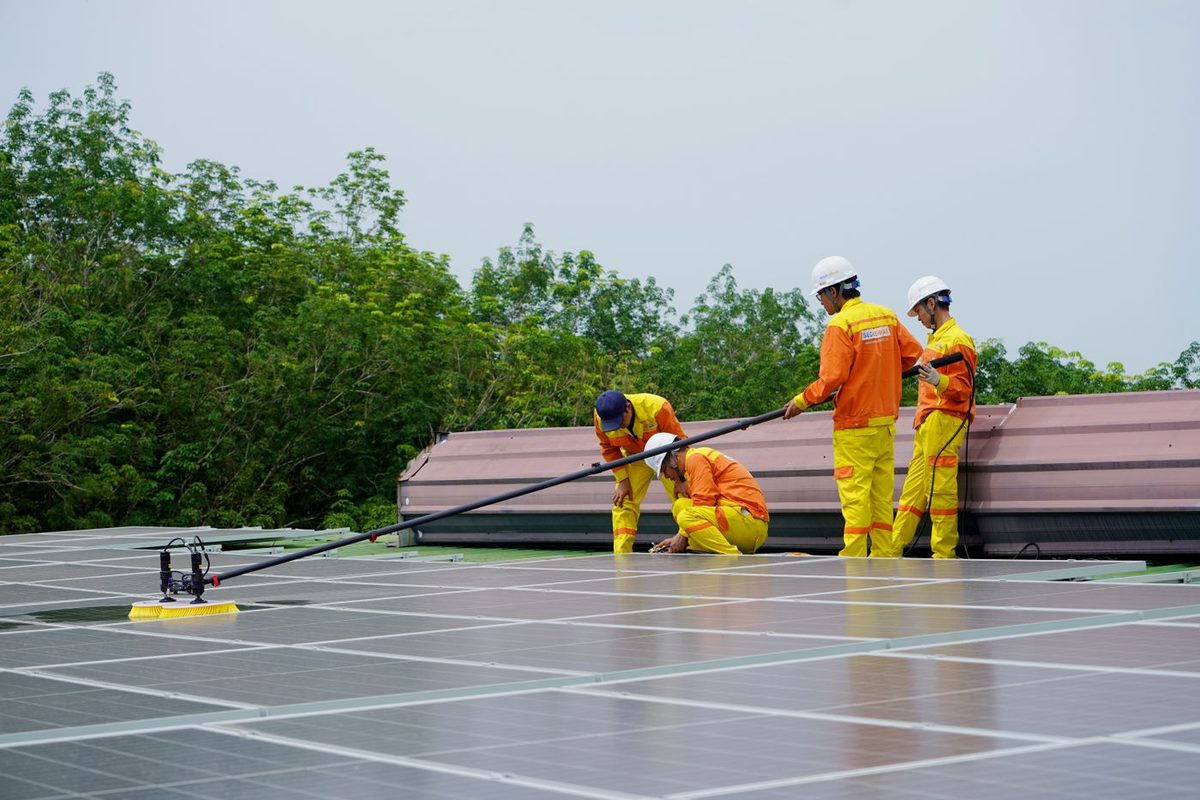
Use plain water and a soft brush or sponge on a long pole, and do it early in the morning or in the evening when the panels are cool. Avoid harsh chemicals and pressure washers, and check your warranty for cleaning rules.
Stay off the roof
Do not climb on the roof to clean panels. If they are hard to reach, ask a professional. We offer maintenance for the systems we install, and you can get in touch to ask about it.
What to leave to a professional
Some tasks are best left to people with the right training and equipment. Working on a roof carries a real risk of falls, and the wiring on a solar system can carry high voltage direct current even when the sun is low.
Roof access, electrical inspections, inverter repairs and anything that involves opening a box or touching a cable should be done by a qualified installer. If you are unsure, take a photo and send it to your installer.
Use your monitoring app
Check the app now and then. If production drops compared with the same time last year, or one panel shows much less than the others, something may need attention.
Trim trees and look for wildlife
New shade from a growing tree can cut output. Birds and squirrels sometimes nest under panels, and a wire mesh fitted by a professional keeps them out.
A yearly checklist
Once a year, look over your system from the ground and from your monitoring app. A short checklist helps.
- Compare this year's production with last year's for the same months.
- Look for new shade from trees that have grown.
- Check for loose cables, damaged panels or signs of animals nesting under the array.
- Look at the inverter's display or app for error messages.
- Keep your warranty papers and the installer's contact details in one place.
The short version
- Panels need little care, but dust and shade can lower output.
- Use your monitoring app to decide when a clean is worth it.
- Leave roof work and electrical work to a professional.
- Do a simple check once a year.